

Flea Control
Another biter often mistaken for bed bugs. We treat carpets, pet bedding, and baseboards.
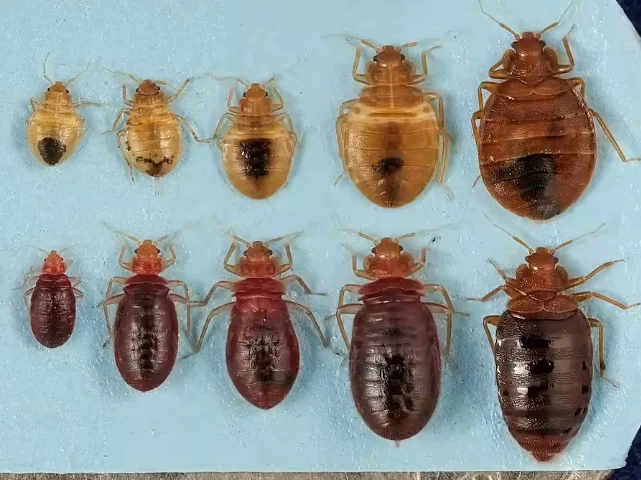
View Flea Control →Adult bed bugs are flat, reddish-brown, and about the size of an apple seed. They turn purplish-red after feeding. Bed bugs are not a sign of poor hygiene, and they can affect anyone.
Bites alone are not proof. Reactions vary, and some people show none at all.
Many things get mistaken for bed bugs. Mosquito and other insect bites look alike, fleas also bite, and similar bugs live on bats, swallows, and poultry. Most samples sent in for identification turn out not to be bed bugs. That’s why we confirm before we treat. If you’re not sure, send us a clear photo or keep the bug in a sealed container.
Bed bugs follow people, not weather or woods. They ride in luggage, clothing, bedding, and used furniture, and can sit unnoticed for months before you find them. Here’s how that plays out locally.
Hotels and short-term rentals downtown and by the lake change guests often. Busy events like the Fourth of July Festival and the Holiday Light Show mean more bags coming in and out.
Cabins sit empty, then fill with travelers’ bags when families arrive for vacation.
In Coeur d’Alene and Post Falls, bed bugs can travel between rooms and floors through shared walls, electrical conduits, and wall gaps. If a neighbor has them, tell your property manager.
Hotels, planes, and shared spaces are common sources. If you travel often, check your bags and wash your clothes when you get home.
Call (208) 248-2701. Tell us which rooms show signs. Keep using your own bed. Don’t throw out your mattress, move to another room, or set off a fogger. These can spread bed bugs.
A licensed technician checks seams, box springs, frames, headboards, baseboards, and furniture. We confirm bed bugs before we treat.
We treat the hiding spots we find, including cracks and furniture joints, following the product label. We give you a prep list: wash and dry bedding and clothes on high heat for at least 30 minutes, bag clean items, and vacuum.
We tell you what we found, which rooms we treated, and what to do next, such as interceptor traps under the bed legs and mattress encasements.
Eggs hatch after treatment, so most jobs need more than one visit. We recheck and treat again if needed.
We give you a free inspection and a written estimate before any work starts. The price depends on four things.
The number of bedrooms, and whether it’s an apartment, townhome, single-family home, or multi-room lodging unit.
Early activity on one mattress costs less than activity across baseboards and furniture in many rooms.
Crack and crevice treatment, void treatment, and encasements each take different work.
Follow-ups catch newly hatched bugs, and most bed bug jobs need at least one.
You get the price in writing before work starts.
We serve Coeur d’Alene, ZIP codes 83814 and 83815, and nearby North Idaho communities:
These habits keep bed bugs out of your home and make them easier to catch early.
Check headboards, mattress seams, baseboards, and picture frames before you bring bags in. Keep luggage off the bed and the floor.
When you get home, wash travel clothes right away on high heat. Store luggage in sealed plastic bags, away from the bedroom.
Check used furniture closely before bringing it in. Never bring home a roadside mattress or couch.
Put zippered covers on your mattress and box spring. Leave them sealed for at least a full year, because bed bugs can live a long time without feeding.
Vacuum mattress seams, headboards, and floor cracks. Seal the vacuum bag and put it in an outside trash can right away.
Clear boxes, clothing piles, and items stored under the bed. Fewer hiding spots makes inspection easy.
Bed bugs live indoors, so they can show up any month. What changes is how they arrive.
Rental turnover, move-outs, and garage sales bring in used furniture.
More travel and full lake rentals and hotels raise the chance of picking them up.
Check mattresses and store linens in sealed plastic tubs before you lock up for winter.
Holiday guests, family travel, and visitors in town for the Holiday Light Show bring more luggage into homes and rentals.
Direct, practical answers from our licensed pest control professionals.
Ask a Specialist: (208) 248-2701No, in the vast majority of cases, you do not need to throw away your mattress, box spring, or furniture. Modern professional treatments effectively eradicate bed bugs and their eggs from upholstered surfaces. The EPA specifically advises against discarding beds, as dragging infested mattresses through hallways can spread bed bugs to other rooms. Instead, we treat the seams and frame, then recommend sealing mattresses and box springs inside high-quality, zippered bed bug encasements.
Chemical treatments use targeted products, desiccants, and Insect Growth Regulators (IGRs) that provide residual protection against newly hatching nymphs over several weeks. Heat treatment requires specialized commercial heating equipment to raise room temperatures to lethal levels, but provides no residual protection once the area cools. For most residential and rental settings, a thorough targeted residual program offers reliable control.
Store-bought aerosol bombs and foggers do not penetrate into the tight cracks, wall voids, behind baseboards, or under mattress tufts where bed bugs hide. Even worse, the repellent pyrethroid chemicals in consumer foggers cause bed bugs to panic and scatter deeper into walls and adjacent rooms, turning a localized problem into an entire house infestation. Professional bed bug products utilize non-repellent formulations and residual dusts that bugs cannot detect or avoid.
Despite their name, bed bugs do not only live in beds. They nest anywhere within 5 to 10 feet of where people rest or sit for extended periods. Common harborages include couches, recliners, nightstand joints, baseboard moldings, behind electrical faceplates, curtain hems, picture frames, and carpet edges. In heavy infestations, they can spread throughout every room in the home.
Most bed bug infestations require follow-up visits because eggs can hatch after an initial service. A structured visit plan ensures that newly emerged nymphs are eliminated before reaching maturity. We explain the recommended inspection schedule and written workmanship warranty in your upfront estimate.
Yes. In multi-family complexes, duplexes, and apartment buildings across Coeur d'Alene, bed bugs easily travel between shared walls by crawling through electrical conduit pipes, plumbing access holes, heating ducts, and beneath hallway doors. When treating an apartment, we always recommend inspecting all immediately adjacent units (above, below, and beside) to stop cross-unit re-infestation.
Pests often mistaken for bed bugs or active alongside them in North Idaho
Another biter often mistaken for bed bugs. We treat carpets, pet bedding, and baseboards.
View Flea Control →Roaches hide in cracks, cabinets, kitchens, and bathrooms.
View Roach Control →Mice and rats nest in wall voids, attics, and crawl spaces.
View Rodent Control →Outdoor biters near decks and shorelines that leave itchy welts.
View Mosquito Control →Tell us what you see, and we will call back during business hours. Your inquiry stays private.
Direct Phone
(208) 248-2701Service Headquarters
Coeur d'Alene, Idaho
Business Hours
Monday to Friday: 7 AM to 7 PM
Saturday: 8 AM to 4 PM